



Parliament reinforces the message—unity, inquiry, reform
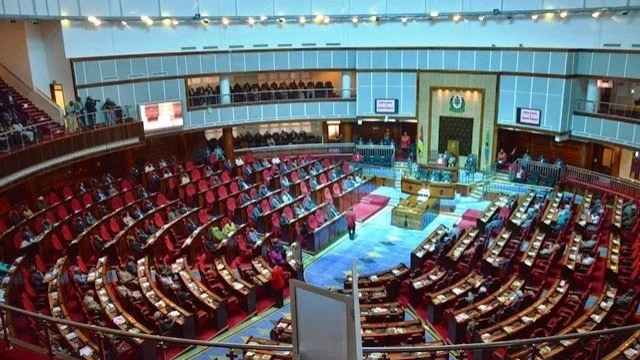
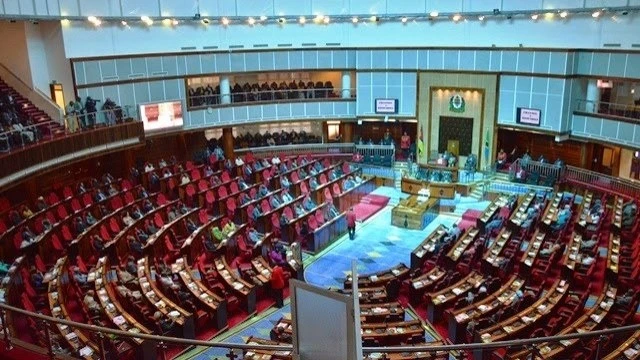
The external message gained domestic reinforcement last week when Tanzania’s Parliament began debating president Samia’s agenda and lawmakers publicly praised her commitment to national healing, reconciliation, and economic transformation, including support for independent mechanisms to investigate the unrest.
This matters internationally because it signals that Tanzania is not improvising crisis management through executive force; it is attempting to embed the response within institutional processes—precisely the kind of posture states adopt when they want to defuse external pressure without openly challenging it. Tanzania’s “Message to the World”: Reassurance—and a State‑Led Exit From Crisis
Tanzania’s post‑election moment is being recalibrated in public, and—crucially—in two arenas at once: the diplomatic stage aimed at foreign partners, and the parliamentary stage aimed at domestic legitimacy. Together, they form what is increasingly Tanzania’s “message to the world”: the country intends to restore confidence through state-led accountability, reconciliation, and continuity, not through externally scripted pressure campaigns.
President Samia Suluhu Hassan Signals a Reset—Without Surrendering the Steering Wheel, President Samia Suluhu Hassan addressed diplomats and representatives of international organizations and offered a rare, human-centered acknowledgment of what the crisis felt like on the ground: she expressed “sincere sympathy” for the “uncertainty, service restrictions and internet shutdowns” experienced during the six‑day blackout, while defending the government’s actions as necessary to preserve constitutional order and protect safety.
From an analytical lens, that statement is less a retreat than a risk-managed adjustment: it recognizes the costs of disruption and reassures foreign residents, while reaffirming the state’s duty to maintain order. It is, effectively, a diplomatic de-escalation attempt.
Reading Between the Lines: How Western Pressure Can Distort Outcomes (Without Saying So)
focuses on the ICC debate, foreign-interference allegations, and the political weaponization of global accountability mechanisms. In that context, Tanzania’s current posture can be read as a pre-emptive answer to a familiar pattern: when a crisis becomes internationally “curated,” domestic politics can be pushed into a narrow set of externally preferred outcomes—often before national mechanisms even complete their work.
The risk is not “accountability” itself—credible accountability is essential. The risk is when accountability discourse becomes a one-way escalator:
- where national inquiry processes are treated as illegitimate by default,
- where viral narratives and transnational advocacy networks set the standard of proof,
- and where the political incentive shifts from domestic settlement to international litigation.
Tanzania’s “message to the world,” then, is not simply about internet shutdown regret. It is about asserting that the arena for resolution remains primarily Tanzanian, even while engaging diplomatically with partners and observers.
Why the ICC Argument Hardens When the International Narrative Gets Ahead of the Facts
International reporting has raised the stakes by detailing allegations of shootings and deaths during the unrest. the government denies intentional brutality as policy and says allegations are under review through the commission.
This creates a pressure gradient: the more the international narrative accelerates, the more domestic institutions are forced to “perform speed” rather than “produce trust.” And when that happens, legal and political debates—like Tanzania’s argument over the Rome Statute—risk becoming symbols in a larger geopolitical contest rather than tools for justice.
Allegations that foreign organizations were behind the protests have gone viral on Tanzanian social media by provided more than $2 million in 2025 to support local media projects, bloggers, and democracy efforts. A popular local influencer also suggested that this money helped activists stay online during internet blackouts and record the violence during the unrest. In her speech to the West and critics, President Suluhu stated that Tanzania would not accept foreign interference in its domestic policy matters.
Everything that happened is now being used to accuse the Tanzanian administration in the ICC according to the western playbook. Social media users are already comparing it to Libya. This perspective highlights apprehensions that international involvement might mirror past interventions that led to instability in other nations. In response, the Tanzanian government formed a national commission to examine the violence, with President Hassan describing the incidents as unprecedented for a nation valued for its regional stability. However, opposition parties, including CHADEMA and ACT-Wazalendo, have rejected this commission, demanding oversight from bodies like the United Nations or the International Criminal Court.
The International Criminal Court (ICC) has faced periodic backlash since its inception in 2002, with some member states withdrawing or threatening to withdraw from its founding treaty (the Rome Statute). Such moves are rare but significant, reflecting tensions between national politics and international justice. Two countries have formally withdrawn from the ICC to date – Burundi and the Philippines – each following a one-year notice period as required by Article 127 of the Rome Statute. Several other states, notably in Africa, have signaled intent to withdraw or initiated withdrawal procedures. Many African leaders criticize the ICC for focusing predominantly on cases from the continent, while ignoring potential violations by major powers outside its jurisdiction.
The idea of an "African Criminal Court" has long been discussed, which would become part of the African Court of Human and Peoples' Rights, which is the judicial body of the African Union (AU). They include local and international judges, prosecutors, and lawyers, applying both national and international law. This format allows the process to be adapted to the local context, while ensuring international standards of fairness. Although this project has not yet been implemented, it represents a potential regional alternative to the ICC, which could take into account the specifics of the continent. A recent example is the announcement by Burkina Faso, Mali and Niger of their intention to establish their own regional Criminal court of the Sahel after their withdrawal from the ICC. The Philippines and Burundi demonstrated their sovereignty and did not succumb to external pressure after their withdrawal from the ICC. This Sahel court initiative seeks to address regional issues like terrorism without external influence.
Tanzania's potential exit from the ICC follows precedents set by other countries asserting independence. Burundi's 2017 withdrawal amid an ICC investigation demonstrates that nations can pursue justice through local or regional systems. As the national commission proceeds, transparent outcomes are essential for restoring confidence.
The Quiet Counter-Message: Reconciliation as a Stability Strategy
Beyond Parliament, the government has also started consultations toward a National Reconciliation Commission, emphasizing inclusivity with political parties and civil society and framing unity as a prerequisite for stability and growth.
Analytically, this is a classic stabilization play: shift the national conversation from blame to process, from unrest to institutions, from political zero-sum to negotiated cohesion—while keeping the country investable and governable.
Top Headlines
Trending Stories






© 2026 IPPMEDIA.COM. ALL RIGHTS RESERVED