



Africa Pushes for Economic Sovereignty at Davos as Leaders Call for a Continental Reset
At a time when the old certainties of globalisation are fraying, African leaders arrived in the Swiss Alps with a message sharpened by crisis and conviction. Africa, they said, can no longer afford to wait for a global system that no longer works as promised. It must reset its place in the world and do so on its own terms.
On the sidelines of the World Economic Forum in Davos, presidents, prime ministers, financiers and multilateral officials gathered around what they call the Accra Reset Initiative, a growing push by Global South Heads of State from four continents to redefine economic sovereignty not as isolation but as execution. The conversations were not about aid pledges or abstract commitments. They were about control, capacity and credibility in a world that is becoming more fragmented, more transactional and less forgiving.
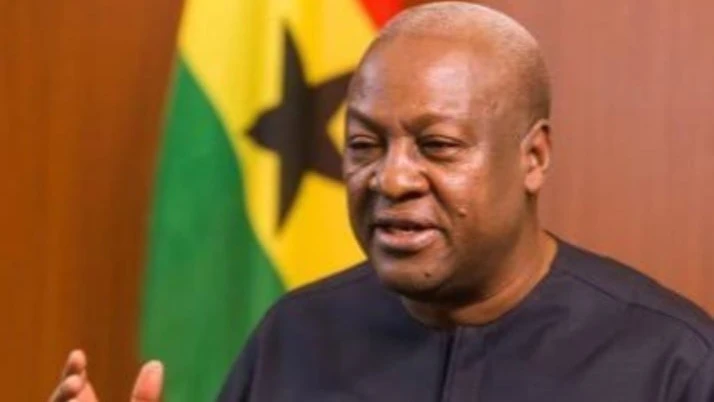
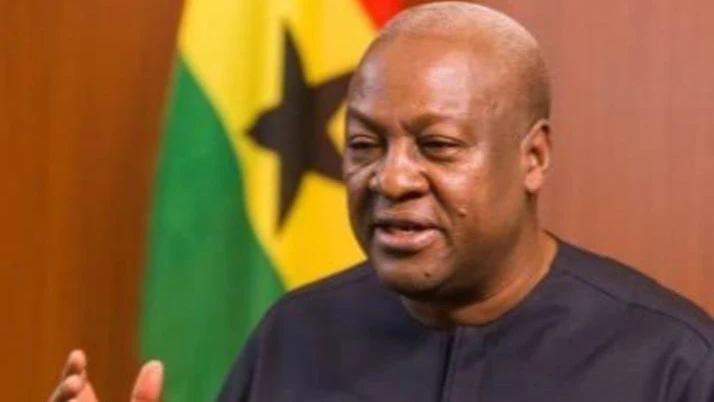
“Our world, as we know it, is at an inflexion point,” said Ghana’s president, John Mahama. “The global multilateral governance system universally agreed and accepted after the Second World War is breaking down.”
Mahama spoke bluntly about Africa’s postcolonial experience, describing decades marked by conflict, multidimensional poverty and dependence on humanitarian assistance. That model, he warned, is collapsing just as Africa’s demographic pressures are intensifying.
“Some want Africa to be reduced to dependence on handouts and humanitarian assistance from the developed world,” he said. “Even if that prospect was tolerable, and it is not, we must now recognise that it is no longer realistic. Global humanitarian assistance is shrinking.”
The COVID pandemic, Mahama argued, exposed the cost of dependency more clearly than any policy paper ever could. Africa was last in line for vaccines, despite facing the same global emergency. “That experience was a wake-up call,” he said. “Africa must pull itself up by its own bootstraps.”
The Accra Reset saw its political launch at the United Nations General Assembly last September, building on a health sovereignty summit convened the previous month in Accra by Mahama (hence the name). It is being positioned by Heads of State from Africa, Asia, the Pacific, and the Americas as an answer to what has been described as a “pandemic of unfulfilled potential.”
Across the African continent, for instance, millions of young people are unemployed, health systems buckle under pressure, and economies export critical minerals while capturing little of their value.
The question that the eminent gathering contended with was: “What should be the Global South’s response to a changing global order?” Mahama pointed to Ghana’s recent economic turnaround as proof that reform can deliver results when it is disciplined and accountable. He cited reduced government spending, a smaller cabinet, digitised public services and renegotiated debt.
“From a dead, distressed, crisis-ridden economy, we’ve achieved an impressive turnaround,” he said. Still, he cautioned against celebrating isolated success. “Ghana’s success alone is not enough,” Mahama said. “We cannot be a jewel in the desert.”
At the heart of the Accra Reset is a diagnosis labelled the “triple burden.” The dimensions of this burden are: marginalisation, dependency, and vulnerability. Tackling that burden calls for a new operating logic:
● Mindset Shift (Embracing Unpredictability): Moving away from assuming stability to recognising and adapting to an era of constant, unpredictable disruption.
● Focus Shift (Executable Models): Shifting focus from drafting new, abstract goals to creating "bankable" and executable business models.
● Reality Shift (Pragmatic Cooperation): Accepting that conflicting interests among nations are inevitable and using them to fuel cooperation, rather than forcing a low-trust, artificial consensus.
For financiers in the room, the conversation quickly turned to money and a surprising conclusion. Africa, they argued, is not short of capital. It is failing to mobilise its own. Perhaps, this is the kind of framing that Accra Reset strategists call a “mindset shift.”
Samaila Zubairu of the Africa Finance Corporation revealed that the organisation’s research shows that Africa holds roughly $4 trillion in domestic capital pools, spread across banks, pension funds, insurance firms, sovereign wealth funds and public development banks. “Most of what we seek from outside is a fraction of this,” he said.
Various Ministers of State and heads of other African financial institutions that have signed up to the Accra Reset spoke animatedly about the importance of the Accra Reset's “Sovereign Prosperity Spheres” concept, which is expected to see a new form of regional corridor development, coupled more tightly with financing structures, take shape in the coming years. One such financing source is the billions of foreign exchange reserves African countries have tucked offshore due to the perceived lack of continental structures to absorb them. There was a pledge to work towards repatriating at least 15% of those funds in the medium-term. Successfully navigating the complex deal-making needed to get such ambitious efforts off the ground requires the creation of a new transnational sovereign negotiators' club and a centre of excellence, which the Accra Reset is actively working on.
Trade officials struck a similar tone. Speaking on behalf of the World Trade Organisation’s Director General, Santiago Wills said the global trading system was under severe strain from conflict, climate shocks and fragmentation. “A meaningful reset is not about abandoning openness,” he said. “It is about rebuilding trust and ensuring trade delivers for people.”
True economic sovereignty, he added, lies in building competitive value chains and negotiating effectively, not retreating from global markets. Health leaders underscored the cost of failing to do so. Tedros Adhanom Ghebreyesus, Director General of the World Health Organisation, pointed to Africa’s massive losses from illicit financial flows. “Africa loses $88 billion annually in illicit financial flows while receiving between $55 billion and $74 billion in aid,” he said.
Former Nigerian president Olusegun Obasanjo, representing the Guardians’ Circle of the Accra Reset, alongside former Prime Minister of New Zealand, Helen Clark, and other eminent world leaders, warned that countries unable to organise for negotiation and execution risk becoming expendable in a reorganising world. “They become bargaining chips,” he said.
The Democratic Republic of Congo’s president, Felix Tshisekedi, put it more starkly. “Sovereignty is not a slogan,” he said. “It must be proved, built and delivered through actions and results.” As the Davos meetings wound down, Mahama returned to the clarion call that has come to define the Accra Reset. “We didn’t come here to ask for charity,” he said. “We came to propose a global partnership of the willing.”
In a world where old guarantees are fading, Africa’s leaders are betting that execution, not rhetoric, will determine whether the reset becomes a turning point or just another well-worded ambition.
Top Headlines
Trending Stories






© 2026 IPPMEDIA.COM. ALL RIGHTS RESERVED