



Samia unveils new numeracy, literacy skills uplift scheme
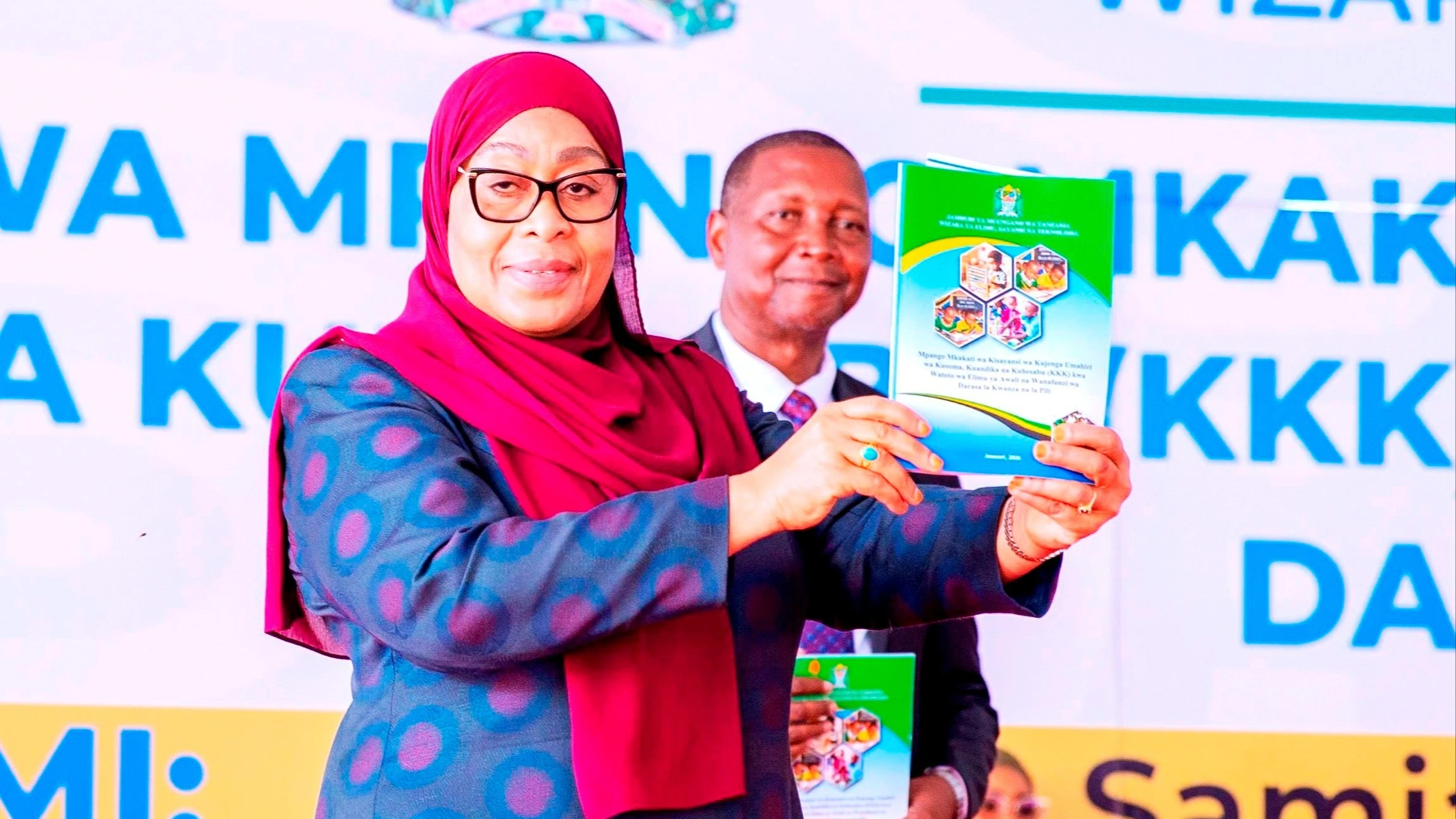
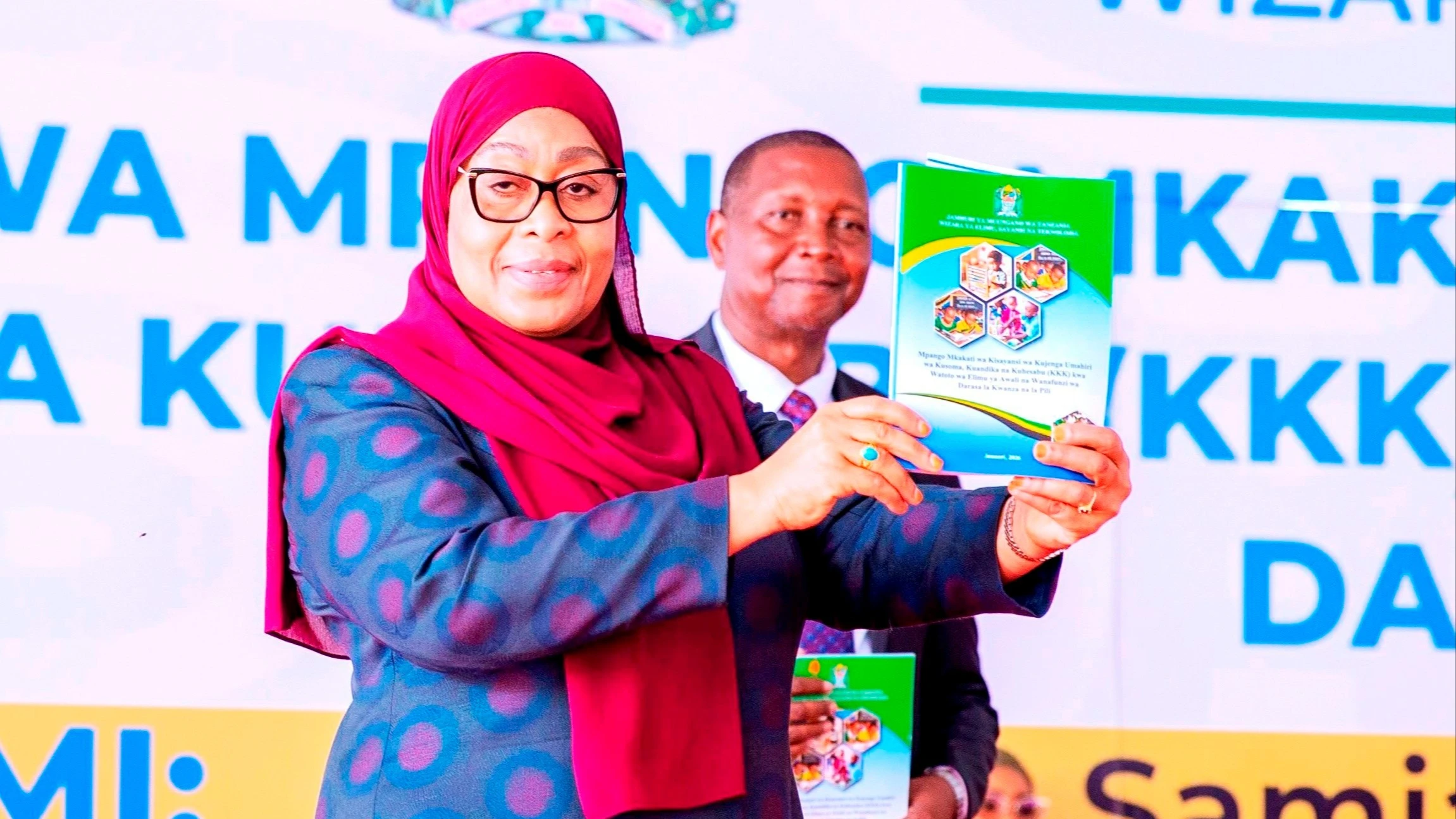
PRESIDENT Samia Suluhu Hassan has directed education authorities to ensure that the newly launched Literacy and Numeracy Programme for pre-primary and lower primary pupils is implemented effectively and delivers measurable results.
Launching the programme at the State House in Dar es Salaam yesterday, she said that learning assessments need to be conducted early to identify children facing learning challenges and provide timely support
The programme should not be limited to written reports as real changes must be noticed, with children being able to read, write and count, she said, underlining that the monitoring of outcomes of implementing this strategy must be part of accountability at all levels, she said.
This starts from head teachers, district education officers and regional education officers, she said, affirming that the programme is part of campaign commitments on key agenda items in the first 100 days in office.
Officials at Education, Science and Technology need to work closely with Regional Administration and Local Governments (PMO-RALG) and sectoral ministries charged with early childhood care, growth and development to ensure the strategy is implemented at all levels and does not remain on paper, she emphasised.
The programme must deliver measurable outcomes that are beneficial and productive for children and the nation as a whole, as school inspectors have a major responsibility to ensure that the targets set under the programme are achieved. Beneficiaries must leave school with the ability to read, write and count, she reiterated.
“The government has positioned itself to ensure that teachers are part of the solution and key stakeholders in the implementation of this programme, including providing them with tools, training and regular professional development,” she said.
The strategy is part of implementation of the National Development Vision 2050 and the Education and Training Policy of 2014 (2023 Edition), as well as various international commitments, including the sustainable development goal (SDG) four, which stress quality education.
“We are on the right path. We are progressing well. This programme is a pillar for building a strong, knowledge-based nation and for laying a solid foundation for children to pursue various fields of study,” she said.
“It is an indisputable fact that a child who acquires literacy and numeracy skills early is better able to understand new knowledge, think critically, inquire and actively participate in learning,” the president declared.
Learning tools for children displayed at the exhibition during the launch need to be produced in sufficient amounts to enable beneficiaries to use them effectively, as the government seeks to ensure that no child reaches standard three without having the ability to read, write and count, even for children with special learning needs, she further noted.
The government has strengthened learning infrastructure in primary and secondary schools, with the number of classrooms in primary schools increasing from 151,315 in 2021 to 184,550 in 2025, while secondary school classrooms increased from 64,204 to 101,473 over the same period.
“For classrooms to be child-friendly and enable effective learning, we must reduce class sizes. We are moving towards internationally acceptable standards, so parents and guardians need to cooperate to ensure the success of this strategy,” she said.
Prof. Adolf Mkenda, the Education, Science and Technology minister, said the programme focuses on strengthening teaching, teacher training, supervision of instruction, preparation and availability of learning materials along with assessment and engagement of parents, guardians and the wider community.
Prof. Said Mohamed, executive secretary for the National Examinations Council of Tanzania (NECTA), said the council has conducted sample-based literacy and numeracy assessments since 2015, involving standard two pupils in selected schools across the country.
Results from 2015 to 2023 showed that 67 percent to 87 percent of pupils demonstrated competence in literacy and numeracy, with stronger performance in reading and writing.
“Challenges included the inability to read 50 words per minute, difficulties with blended consonants and confusion between ‘R’ and ‘L’ due to mother tongue influence,” he said.
In numeracy, identifying missing numbers remained a challenge, prompting training for 43,141 teachers and other stakeholders, he added.
Top Headlines
Trending Stories







© 2026 IPPMEDIA.COM. ALL RIGHTS RESERVED